May 12, 2025
Mental Health Starts Early: VCU Programs Help Professionals Support Kids' Mental Health
May is Mental Health Awareness Month – a time to raise awareness, reduce stigma and provide resources to the millions of Americans and their families who are affected by mental health conditions. But children are often left out of this vital conversation. In fact, the Substance Abuse and Mental Health Services Administration (SAMHSA) says “only half of children and adolescents with diagnosable mental health conditions receive the treatment they need.”
Jackie Robinson Brock, a program specialist for VCU’s Infant Mental Health Program, says awareness of early childhood interventions is key to ensuring that everyone in a child’s life is “equipped with the tools and resources to help them.”
“I think the biggest misconception is kids don't have mental health issues…It just looks different a lot of times.” Brock said.
VCU’s Infant Mental Health and Play Therapy programs give professionals who work with children the training and professional development they need to build solid relationships with the children they encounter.
The Infant Mental Health program is designed for teachers, counselors and other professionals who work with children from birth to age six, deepening their understanding of early childhood mental health by focusing on social and emotional development. The 28-hour training explores key concepts like attachment, brain development and relationship-based practices.
Brock says one of the biggest components of the program is providing participants with the resources they need to conduct developmental screenings.
“We provide training and resources around how to use particular developmental screening tools when you do have a child that's in your care who has a developmental concern,” Brock said. “How do you have that conversation with parents?”
Ideal for post-bachelor’s professionals, the professional development course meets the competencies required for Virginia’s Infant Mental Health Endorsement and includes a Certificate of Completion.
“Some states have degree programs for infant and early childhood mental health. Virginia is not one of them,” Brock explained. “So this is a nice way that we are able to get that information and those resources out to people who are interested.”
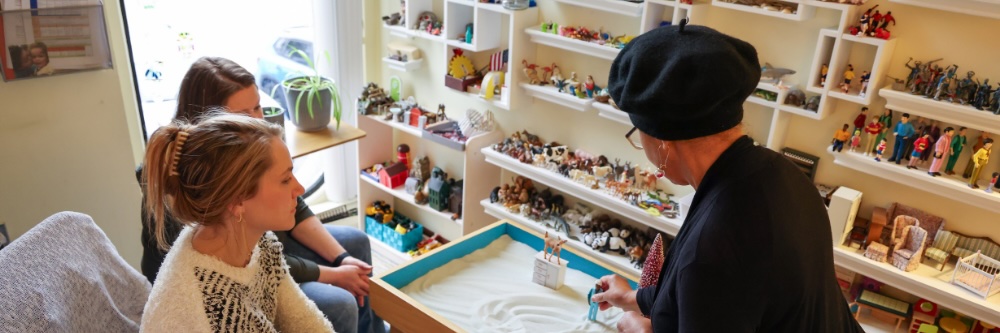
VCU’s Play Therapy program also offers participants a way to connect with the children they work with. All of the workshops offered within the Play Therapy Program meet the play therapy training requirements for the Registered Play Therapist™ (RPT), Registered Play Therapist—Supervisor™ (RPT-S), and School-Based Registered Play Therapist™ (SB-RPT) credentials. While designed for those who work in behavioral health or school social work, Katie Francis, Childsavers senior program manager, says anyone who works with children could benefit from courses like the Principles of Play Therapy.
“Even if you don’t want to be a registered play therapist, knowing how to use play in therapy and knowing how to use play in engaging with children in their environment is really helpful,” Francis said.
Learn more about upcoming courses in Infant Mental Health and Play Therapy.